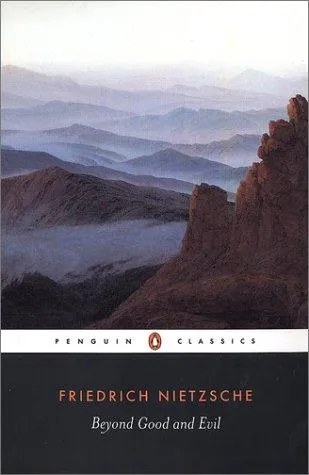
About this work
Beyond Good and Evil is Friedrich Nietzsche's 1886 attack on the assumptions behind traditional morality and philosophy. In sharp, aphoristic sections he questions the will to truth, the idea of free will, and the very opposition of good and evil, arguing that our moralities are expressions of life and power rather than eternal facts. It is Nietzsche at his most incisive.
About the author — Friedrich Nietzsche
Friedrich Nietzsche (1844 to 1900) was a German philosopher who challenged the foundations of Western morality and religion. He wrote in aphorisms and polemic, demanding that thinkers take responsibility for creating their own values.
2 quotes from this work
Against that positivism which stops before phenomena, saying "there are only facts," I should say: no, it is precisely facts that do not exist, only interpretations.
He who fights with monsters should be careful lest he thereby become a monster. And if you gaze long into an abyss, the abyss also gazes into you.
People also ask
What is Beyond Good and Evil about?
A critique of conventional morality and the philosophers who defended it. Nietzsche argues that ideas of good and evil are human creations tied to life and power, not timeless truths.
Is Beyond Good and Evil hard to read?
It is demanding. Written in dense aphorisms, it rewards slow reading and some familiarity with the tradition Nietzsche is arguing against.
How does it relate to Thus Spoke Zarathustra?
It revisits the same ideas in a more direct, polemical form. Where Zarathustra speaks in parable, Beyond Good and Evil makes the argument plainly.