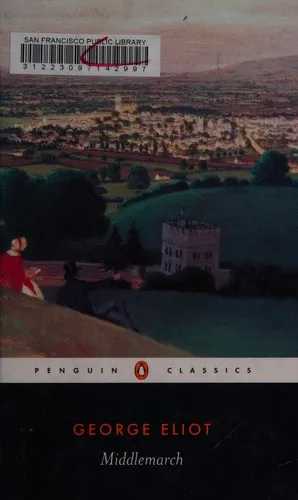
About this work
Middlemarch is George Eliot's 1871 novel of provincial English life, often called the greatest novel in the language. Through the entwined fates of an idealistic young woman, a reforming doctor, and a whole town, Eliot examines how high hopes meet the friction of ordinary circumstance. Its sympathy and intelligence are almost unmatched in fiction.
About the author — George Eliot
George Eliot (1819 to 1880) was the pen name of Mary Ann Evans, one of the leading novelists of the Victorian era. She wrote with rare moral depth about the inner lives of unremarkable people, and chose a male pen name to be taken seriously.
2 quotes from this work
What do we live for, if it is not to make life less difficult to each other?
The growing good of the world is partly dependent on unhistoric acts; and that things are not so ill with you and me as they might have been, is half owing to the number who lived faithfully a hidden life, and rest in unvisited tombs.
People also ask
What is Middlemarch about?
The interlocking lives of a provincial English town, centered on Dorothea Brooke's thwarted idealism and Dr. Lydgate's ambitions, as Eliot examines how grand hopes collide with everyday reality.
What is the moral of Middlemarch?
That ordinary, unhistoric lives matter immensely, and that the growing good of the world depends on countless small acts of kindness and integrity, as Eliot writes in its famous closing lines.
Is Middlemarch hard to read?
It is long and richly textured, but the prose is clear and the characters absorbing. Virginia Woolf called it one of the few English novels written for grown-up people.