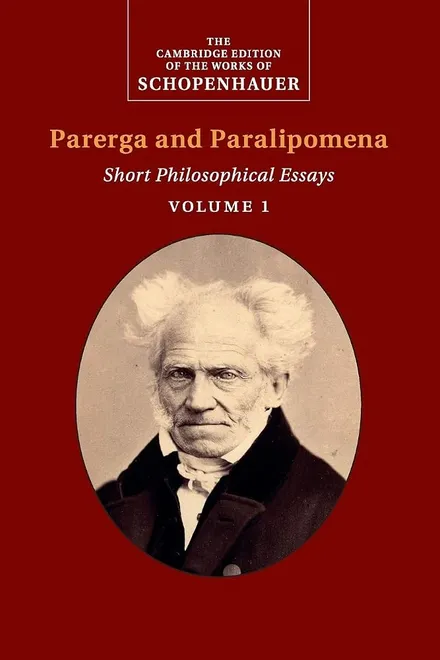
About this work
Parerga and Paralipomena is Arthur Schopenhauer's 1851 collection of essays and aphorisms, the book that finally won him fame late in life. Ranging from the famous reflections on the wisdom of life to thoughts on noise, women, suffering, and style, it is his philosophy made conversational and quotable. Its title means, roughly, appendices and things left over.
About the author — Arthur Schopenhauer
Arthur Schopenhauer (1788 to 1860) was a German philosopher known for a profound pessimism and for arguing that a blind, striving will lies behind all of reality. A brilliant prose stylist, he influenced Nietzsche, Freud, and countless writers.
2 quotes from this work
People also ask
What does Parerga and Paralipomena mean?
The Greek title means, roughly, supplementary works and things left over: a collection of essays and aphorisms that sit alongside Schopenhauer's main philosophy rather than forming a system.
What is the book about?
It gathers Schopenhauer's reflections on living wisely, on suffering, solitude, fame, and human folly, written in a sharp, accessible style that made him popular in his final years.
Is it a good introduction to Schopenhauer?
Yes. Its essays, especially those on the wisdom of life, are far more approachable than his systematic masterwork and a fine way into his thought.