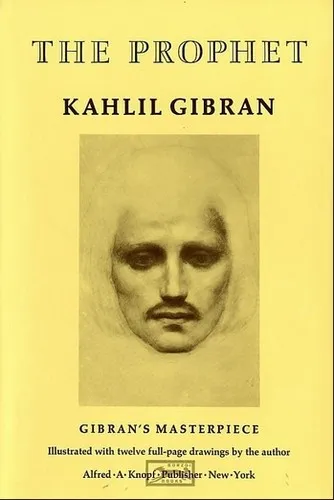
About this work
The Prophet is Kahlil Gibran's 1923 book of twenty-six prose poems, framed as the parting counsel of a sage about to leave the city where he has lived. He speaks in turn on love, marriage, children, work, joy and sorrow, freedom, and death. Translated into more than a hundred languages and never out of print, it is one of the best-selling books of all time and a fixture at weddings and funerals around the world.
About the author — Kahlil Gibran
Kahlil Gibran (1883 to 1931) was a Lebanese-American poet, writer, and artist, best known for The Prophet. Writing between two cultures, he blended the cadence of scripture with a gentle, universal spirituality that resists belonging to any single religion.
8 quotes from this work
Love gives naught but itself and takes naught but from itself. Love possesses not, nor would it be possessed.
Think not you can direct the course of love, for love, if it finds you worthy, directs your course.
The deeper that sorrow carves into your being, the more joy you can contain.
Love gives naught but itself and takes naught but from itself. Love possesses not nor would it be possessed; For love is sufficient unto love.
Your pain is the breaking of the shell that encloses your understanding. Even as the stone of the fruit must break, that its heart may stand in the sun, so must you know pain.
Love knows not its own depth until the hour of separation.
Your children are not your children. They are the sons and daughters of Life’s longing for itself.
Work is love made visible.
People also ask
What is The Prophet by Kahlil Gibran about?
A wise man, about to sail home, answers the townspeople's questions on the great themes of life: love, work, family, freedom, joy, sorrow, and death. Each answer is a short prose poem.
What is the main message of The Prophet?
That the deepest parts of life, love and loss above all, are to be embraced rather than resisted. Gibran treats joy and sorrow as inseparable, two sides of the same openness to living fully.
Why is The Prophet so popular?
Because it speaks to universal moments without preaching a doctrine. Its passages on marriage, children, and death are read aloud at life's turning points in many cultures and faiths.