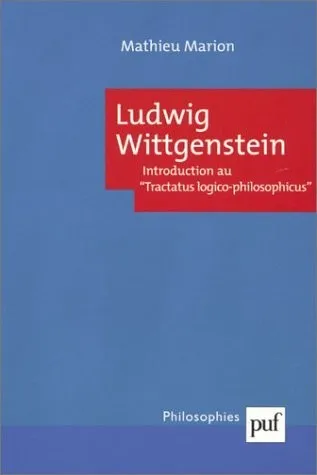
About this work
The Tractatus Logico-Philosophicus is Ludwig Wittgenstein's 1921 attempt to map the limits of language and thought, written as a series of numbered propositions. Its argument builds to a famous edge: what can be said can be said clearly, and the rest, ethics, meaning, the mystical, must be passed over in silence. Whereof one cannot speak, it concludes, thereof one must be silent.
About the author — Ludwig Wittgenstein
Ludwig Wittgenstein (1889 to 1951) was an Austrian-British philosopher who worked on logic, language, and mind, and is among the most influential thinkers of the twentieth century. He believed the Tractatus had solved philosophy's problems, then spent his later life revising it.
2 quotes from this work
People also ask
What is the Tractatus Logico-Philosophicus about?
The relationship between language, thought, and the world. Wittgenstein argues that meaningful language pictures facts, and that what cannot be put into clear propositions, including ethics and the mystical, lies beyond what can be said.
What is the famous line from the Tractatus?
Its closing proposition: whereof one cannot speak, thereof one must be silent. It marks the boundary Wittgenstein draws around what language can meaningfully express.
Is the Tractatus hard to read?
Yes. It is short but extremely compressed, written as terse numbered propositions, and usually read alongside commentary.