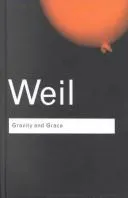
About this work
Gravity and Grace is a collection of aphorisms drawn from Simone Weil's notebooks, published after her death in 1947. Its governing image is simple and severe: gravity is the force that pulls the soul down toward self and appetite, while grace is what lifts it, if we make space by emptying ourselves. It is one of the twentieth century's strangest and most demanding spiritual books.
About the author — Simone Weil
Simone Weil (1909 to 1943) was a French philosopher, mystic, and political activist who worked in factories and fields to share the lives of the poor she wrote about. Her short, intense life produced a body of thought on attention, affliction, and grace that still unsettles readers.
3 quotes from this work
People also ask
What does Gravity and Grace mean for Simone Weil?
Gravity is the moral pull toward the self, the way the soul falls toward appetite and ego; grace is the opposing movement that lifts it, which we receive only by emptying ourselves and paying full attention.
What is Simone Weil's most important book?
Gravity and Grace is her best known, alongside Waiting for God. Both were assembled from her notebooks and letters after her early death.
Is Gravity and Grace difficult to read?
It is concentrated rather than long. The aphoristic form means each line asks to be sat with, so many readers take it slowly, a few pages at a time.