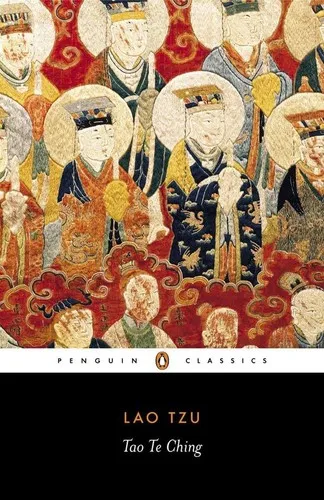
About this work
The Tao Te Ching is the foundational text of Taoism: eighty-one short chapters that circle a single idea the book insists cannot be named. It teaches the way of water and the power of yielding, of acting without forcing, leading without dominating, and finding strength in softness. Few books say so little and imply so much.
About the author — Lao Tzu
Lao Tzu, whose name means Old Master, is the semi-legendary sage traditionally credited with the Tao Te Ching around the 6th century BCE. Modern scholars treat him as a figure rather than a documented individual, yet the voice of the text, patient, paradoxical, quietly subversive, remains unmistakable.
13 quotes from this work
A journey of a thousand miles begins with a single step.
Knowing others is wisdom; knowing yourself is enlightenment.
He who conquers others is strong; he who conquers himself is mighty.
He who knows does not speak; he who speaks does not know.
The journey of a thousand miles begins with a single step.
A violent wind does not outlast the morning; a squall of rain does not outlast the day. Such is the course of Nature. And if Nature herself cannot sustain her efforts long, how much less can man!
Mastering others is strength; mastering yourself is true power.
He who knows that enough is enough will always have enough.
To attain knowledge, add things every day. To attain wisdom, remove things every day.
A good traveler has no fixed plans and is not intent upon arriving.
The more he does for others, the happier he is. The more he gives to others, the wealthier he is.
Nature does not hurry, yet everything is accomplished.
When you are content to be simply yourself and don’t compare or compete, everybody will respect you.
People also ask
What is the Tao Te Ching by Lao Tzu about?
Living in harmony with the Tao, the underlying way of things. In eighty-one brief chapters it counsels balance, humility, and effortless action: working with the grain of reality rather than against it.
What was Lao Tzu's most famous quote?
The most quoted line is that a journey of a thousand miles begins with a single step, a compact statement of the book's faith in small, patient, well-aimed action.
What is the best translation of the Tao Te Ching?
There is no definitive one, because the original is so compressed. Stephen Mitchell's version is the most popular and readable; Gia-Fu Feng and D.C. Lau are favored by readers who want something closer to the literal text.