About this work
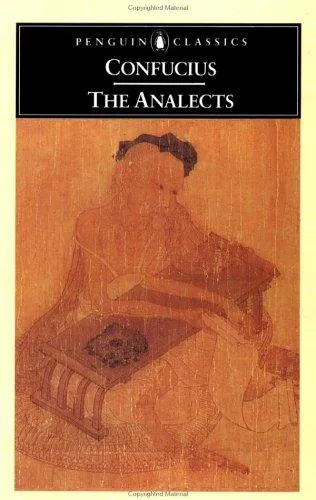
The Analects is a collection of sayings and short dialogues attributed to Confucius and his students, compiled by later followers from the conversations he left behind. It has no single argument; it is a portrait of a teacher in motion, answering questions about how to live, how to govern, and how to treat one another. For two thousand years it shaped the moral imagination of East Asia.
About the author — Confucius
Confucius (c. 551 to 479 BCE) was a Chinese teacher and philosopher of the Spring and Autumn period whose thought became the backbone of Confucianism. He taught that a good society begins with personal virtue, sincerity, and respect within ordinary relationships, long before it depends on laws.
18 quotes from this work
I am not concerned that I have no place; I am concerned how I may fit myself for one. I am not concerned that I am not known; I seek to be worthy to be known.
The superior man has neither anxiety nor fear. When internal examination discovers nothing wrong, what is there to be anxious about, what is there to fear?
When you have faults, do not fear to abandon them.
Fine words and an insinuating appearance are seldom associated with true virtue.
At fifteen my heart was set on learning; at thirty I stood firm; at forty I had no more doubts.
Reviewing what you have learned and learning anew, you are fit to be a teacher.
Learning without thought is labor lost; thought without learning is perilous.
To see what is right, and not to do it, is want of courage.
When we see men of worth, we should think of equaling them; when we see men of a contrary character, we should turn inwards and examine ourselves.
The superior man thinks of virtue; the small man thinks of comfort.
Virtue is not left to stand alone. He who practices it will have neighbors.
They who know the truth are not equal to those who love it, and they who love it are not equal to those who delight in it.
The wise find pleasure in water; the virtuous find pleasure in hills.
The man of virtue makes the difficulty to be overcome his first business, and success only a subsequent consideration.
When I walk along with two others, they may serve me as my teachers.
The superior man is satisfied and composed; the mean man is always full of distress.
What you do not want done to yourself, do not do to others.
Only after winter comes do we know that the pine and the cypress are the last to fade.
People also ask
What is The Analects by Confucius about?
How to live well with other people. It gathers Confucius's sayings on virtue, learning, family, friendship, and good government, all built on the idea that character comes before rules.
What is the golden rule of The Analects?
Do not impose on others what you yourself do not want. Confucius stated reciprocity as a negative rule, a check you can apply to almost any action toward another person.
What are some famous quotes from The Analects?
Among the best known: that the one who learns without thinking is lost, and that real knowledge is to know the extent of one's own ignorance.