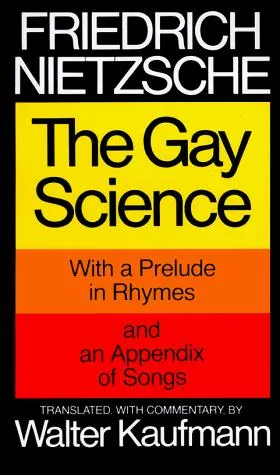
About this work
The Gay Science is Friedrich Nietzsche's 1882 book, a buoyant, wide-ranging mix of aphorism and verse where some of his most important ideas first appear, including the declaration that God is dead and the thought of eternal recurrence. The title evokes the joyful wisdom of the troubadours: knowledge pursued with lightness, courage, and a kind of dancing freedom.
About the author — Friedrich Nietzsche
Friedrich Nietzsche (1844 to 1900) was a German philosopher who challenged the foundations of Western morality and religion. He wrote in aphorisms and called for the creation of new values once the old certainties had fallen.
2 quotes from this work
People also ask
What is The Gay Science about?
It is a collection of aphorisms on knowledge, art, morality, and life, where Nietzsche first announces that God is dead and introduces eternal recurrence. The mood is paradoxically light and affirming.
Why is it called The Gay Science?
The title borrows a medieval phrase for the troubadours' art, meaning a joyful, courageous pursuit of knowledge, free of heaviness and dogma.
Is it a good introduction to Nietzsche?
It is one of his more accessible and exuberant books, and a good place to meet his central ideas before the denser later works.