About this work
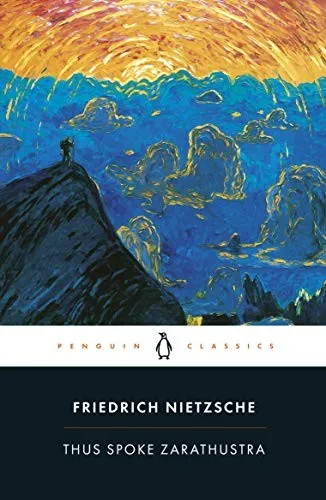
Thus Spoke Zarathustra is Friedrich Nietzsche's 1883 philosophical novel, written in the voice of a prophet who comes down from the mountains to teach. Through parable and poetry it announces his boldest ideas: the death of God, the overman, and the eternal recurrence. Strange, exalted, and often misread, it is the most literary and ambitious of his works.
About the author — Friedrich Nietzsche
Friedrich Nietzsche (1844 to 1900) was a German philosopher who began as a classical scholar and became one of the most provocative thinkers of the modern age. He challenged Christian and conventional morality and asked what values a person might create once old certainties fall away.
3 quotes from this work
People also ask
What does Nietzsche say in Thus Spoke Zarathustra?
He declares that God is dead, calls on humanity to overcome itself and become the overman, and asks whether we could affirm our lives so completely that we would will them to recur eternally.
What are the main points of Thus Spoke Zarathustra?
The death of God and the loss of inherited values, the ideal of the overman who creates his own meaning, and the test of eternal recurrence as a measure of a life fully affirmed.
Is Thus Spoke Zarathustra hard to read?
It can be, because it speaks in parable and poetry rather than argument. Many readers find it rewards a second reading and some background on Nietzsche's ideas.